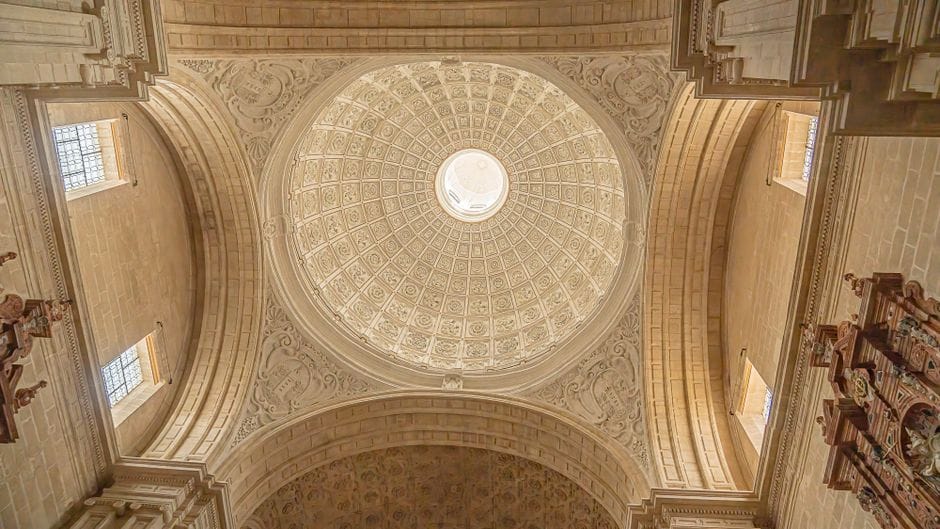
Malta in August is hot, crowded and expensive. Malta in January is mild, quiet and cheap, with the same honey-coloured stone and improbably blue sea, minus the crush. Valletta, the tiny fortified capital, is one of the most concentrated historic cities in the Mediterranean, and winter is the time to walk it properly without melting.
A city built on a grid
The knights who built Valletta laid it out on a strict grid across a peninsula, so the streets run straight down to the water at either end, framing sudden views of the harbour. The baroque architecture is everywhere, from the painted ceiling of St John's Co-Cathedral to the enclosed timber balconies that hang over the streets. It is small enough to cross on foot in twenty minutes, but you will keep stopping.
What to do off-season
- Take the lift or the steps down to the Grand Harbour and watch the boats from the waterfront, then look across to the Three Cities opposite.
- Visit St John's Co-Cathedral for the Caravaggio and the marble tombs underfoot; winter means no queue.
- Take the ferry across the harbour or out to Sliema, a cheap and scenic way to see the city from the water.
The practical case
Winter temperatures are mild rather than warm, often comfortable enough for shirtsleeves at midday, though the evenings cool and the odd storm blows through. Flights and hotels are far cheaper than in summer, and you can pair Valletta with day trips to the old capital Mdina or the island of Gozo.
This is not a beach holiday; the sea is too cool for most. It is a walking, looking and eating holiday in a place where the history is stacked on top of itself and the light, even in January, has a golden quality. For a winter break that does not involve a long-haul flight, Malta is hard to beat.