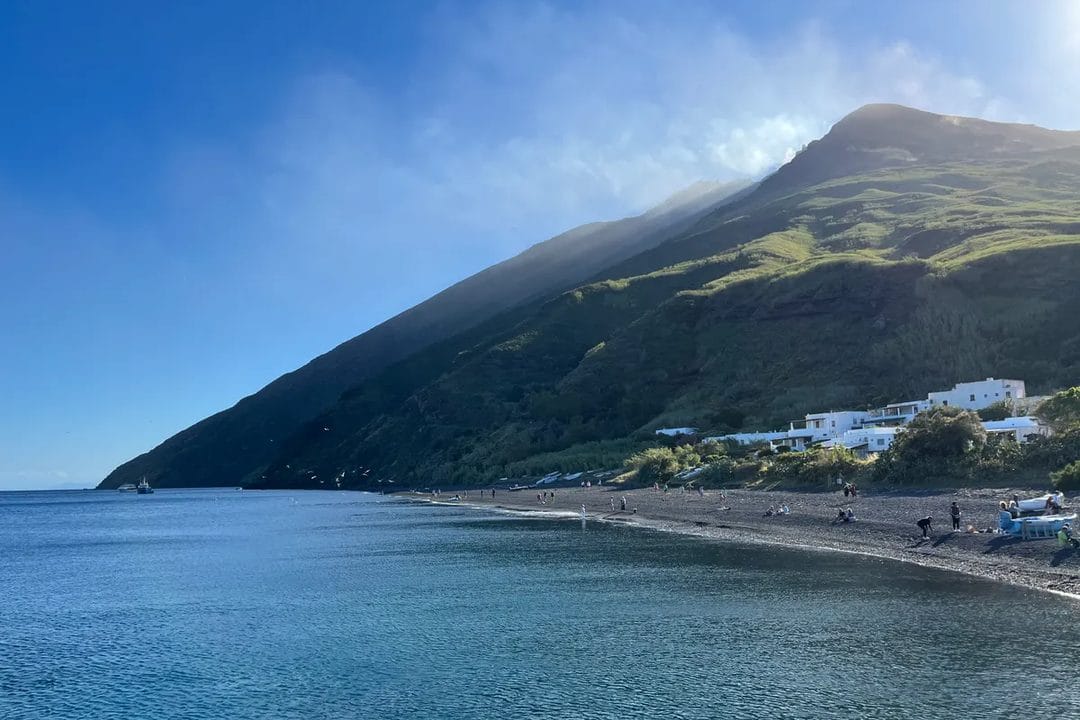
A Glow on the Horizon That Isn't a Lighthouse
From the terrace of a rented room on Lipari, the first thing you notice after dark isn't the moon. It's a faint orange pulse on the northern horizon, roughly every twenty minutes, coming from an island that has been erupting more or less continuously since the Bronze Age. That's Stromboli, and the locals barely look up when it happens — "u Iddu", they call it, "him", as though the volcano were an elderly relative who still throws the occasional tantrum. For a first-time visitor, it's the kind of detail that makes the whole Aeolian archipelago feel like a working landscape rather than a postcard: something is genuinely still happening here, and you're allowed to watch. Boats go out from Lipari and Salina most clear nights specifically to watch the display from the water, engines cut, everyone quiet for exactly as long as it takes the next flare to arrive. Give it three nights and you stop reaching for your phone every time it flares.
That sense of a place still doing its own thing is exactly what's missing from Italy's more famous summer coastlines this year. Amalfi has introduced number-plate restrictions on its coast road because the queues of cars physically cannot fit any more. Capri caps day-tripper numbers in peak season. Cinque Terre sells timed village entry tickets like a theme park. Positano's beach clubs routinely take bookings weeks ahead through the height of summer, and turning up without one means paying triple for whichever spot is left. Meanwhile, seven volcanic islands sit forty-five minutes off Sicily's north coast, served by proper scheduled hydrofoils, with no permit system, no quota, and — for now — noticeably shorter queues at the harbour bar.
Getting There: Milazzo, Not Naples
Most people who've heard of the Aeolians assume you reach them from Naples, and you can — Liberty Lines and SNAV both run summer hydrofoils from Naples' Molo Beverello, taking around three to four hours depending on the stops. But the quicker, cheaper route is via Milazzo, on Sicily's northern coast, which is where nearly all the inter-island traffic actually starts and ends. Catania and Palermo airports both connect to Milazzo by coach or train plus a short taxi in well under two hours, and from there Liberty Lines hydrofoils reach Lipari, the archipelago's hub, in around forty-five minutes. If you're booking flights from the UK specifically for the islands, Catania tends to have more budget routes on offer than Palermo through the summer, on both Ryanair and easyJet.
Book the Milazzo–Lipari crossing a few weeks ahead in August; the 7.30am and 9am departures sell out first because they let you reach the smaller islands the same day. A one-way hydrofoil ticket runs roughly €20–28 depending on the operator and route, and inter-island hops between Lipari, Vulcano, Salina and the rest typically cost €8–15. Car ferries exist too, run by Siremar, and they're cheaper — but unless you specifically need a vehicle on Salina or Lipari, skip them. The hydrofoils are faster, air-conditioned, and don't leave you smelling of diesel for the rest of the afternoon.
Seven Islands, Seven Different Holidays
The mistake most first-timers make is picking one island and staying put for the whole trip. The Aeolians work far better as a hopping circuit, because each one has been left to develop its own, almost contradictory character:
- Lipari — the practical base: most rooms, most restaurants, a genuinely good archaeological museum built into the old citadel, and the only island with a real supermarket if you're organising your own meals.
- Vulcano — day-trip territory. Everyone comes for the sulphurous mud baths (around €3 entry), and almost everyone underestimates how much the grey colour and smell cling to swimwear afterwards.
- Salina — quieter, greener, and where the good food actually is: Malvasia dessert wine, capers grown on the terraced hillsides, and Pollara, the clifftop hamlet where Massimo Troisi filmed Il Postino.
- Panarea, its glossier neighbouring island, is by contrast where Italian and international money goes to be seen doing very little, and a single dinner there in August can cost more than a night's accommodation on Salina.
- Stromboli — the reason most people come at all, and the only island where the main activity happens after sunset.
Filicudi and Alicudi, the two westernmost islands, barely get a mention in most guidebooks, and that's precisely their appeal — no cars beyond the odd three-wheeled Ape truck, a handful of guesthouses, and a silence in the evenings that nowhere else in the archipelago still has. Boats there run a couple of times a day rather than every hour, which suits people who came to switch their phone off, not to keep to a timetable.
Climbing an Active Volcano Isn't a Free-for-All Anymore
Here's the part most travel pieces leave out. Since the eruptions of 2019, which killed one hiker and injured several others, access to Stromboli's summit crater has been tightly regulated. You cannot simply walk up on your own past 400 metres; the route above that point is legally restricted to groups accompanied by a certified guide from one of the island's authorised Alpine guide cooperatives, and the ascent itself is routinely suspended altogether when the Istituto Nazionale di Geofisica e Vulcanologia raises the activity alert level. The trek has been shut for stretches of past summers after fresh explosive activity, so travellers who leave no flexibility in their itinerary sometimes miss it entirely. Book the guided night trek at least a few days ahead in August, expect to pay around €35–45 per person, and check the current alert status before you fly — the mountain, not the tour operator, has the final say.
Do it anyway.
Watching incandescent rock arc out of the Sciara del Fuoco against a completely black sky, from a ridge with nothing but sea below you in both directions, isn't something you get from a viewing platform or a drone video. It's also, frankly, one of the only genuinely awe-inducing things left on the Italian coast that hasn't been fenced off, ticketed and turned into a photo queue.
When to Book, and What August Actually Costs
August is peak season everywhere in the Aeolians, and the islands are small enough that "peak" changes the experience noticeably. Panarea rooms can run past €300 a night for anything decent; the same money gets a comfortable sea-view apartment on Salina or Filicudi with change left over for dinner. Lipari sits in between — expect €120–180 for a mid-range double in high season, booked at least six weeks out if you want any real choice. Ferries rarely sell out completely, but the early departures do, and missing the 7.30am from Milazzo can cost you an entire day if you're trying to reach Stromboli and back in a single trip.
Organise your dates around late August rather than the first two weeks, if your schedule allows it. The water is warmer than it is in June, the crowds thin slightly once school holidays pass their midpoint across most of Italy, and hydrofoil prices don't actually drop — so you're not sacrificing anything by waiting. Early September works even better if your dates are flexible, though that's a different article entirely.
The One Thing to Get Right
If you only take one piece of practical advice from this: don't try to see all seven islands in under a week. Every guesthouse owner on Salina will tell you the same thing, usually while pouring you a glass of her favourite Malvasia that you didn't order — the visitors who leave happiest are the ones who pick three islands, not seven, and actually spend a full evening on each one instead of racing for the next hydrofoil. Stromboli for the volcano, Salina for the food and the quiet, Lipari as your base for everything in between. The rest of the archipelago will still be there, glowing gently on the horizon, whenever you come back.