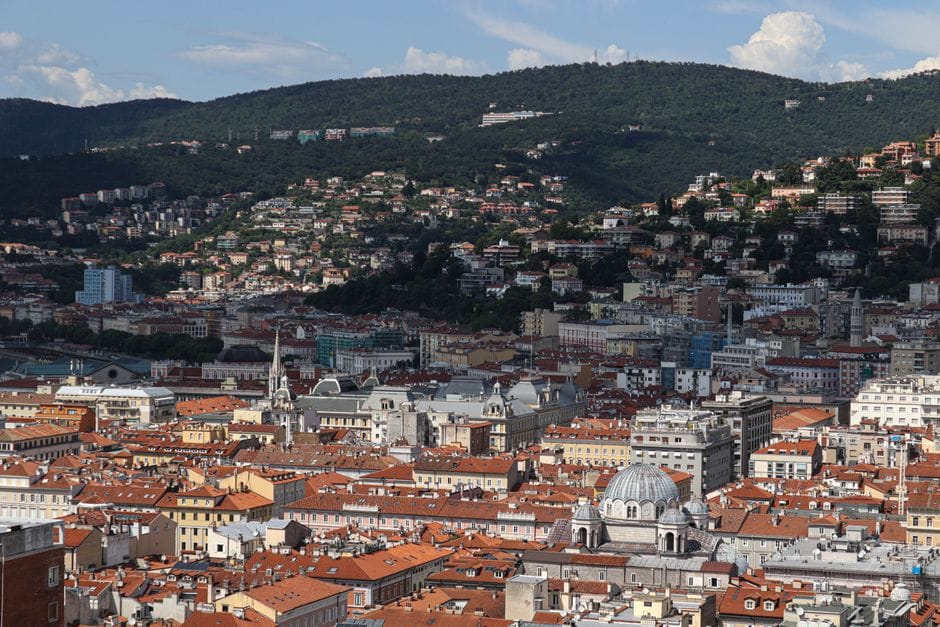
Trieste sits in Italy's top-right corner, hard against Slovenia, and for most of its modern life it looked to Vienna rather than Rome. That history shows. The grand squares and coffee houses feel central European, the food borrows from Austria and the Balkans as much as from Italy, and the whole place has a slightly melancholy, literary air that writers have been falling for since James Joyce taught English here.
A different kind of Italy
The Piazza Unita d'Italia opens straight onto the Adriatic, one of the largest seafront squares in Europe, and on a clear evening the light off the water is extraordinary. Behind it, the streets are lined with cafes that take coffee as seriously as anywhere on the continent; ask for a nero and you will get an espresso, but learn the local terms and you will fit right in.
What to see
- Walk the seafront to the Molo Audace pier at sunset, when half the city seems to be out doing the same.
- Take the bus up to Miramare Castle, a white folly on a promontory with gardens running down to the sea.
- Drink coffee in one of the historic cafes, then read for an hour like a local; nobody will hurry you.
Practicalities
Trieste has its own small airport, but it is also reachable by train from Venice in about two hours, which makes it an easy add-on to a bigger Italian trip. The city is walkable, the bora wind can be fierce in winter, and the coffee, fittingly, is among the best in the country given this is the home of more than one famous roaster.
Come if you like cities with a bit of mystery to them, places that do not perform for visitors and reward a slower pace. Trieste will not dazzle you in an afternoon. Give it two or three days and it gets under your skin in a way the obvious Italian cities rarely manage.