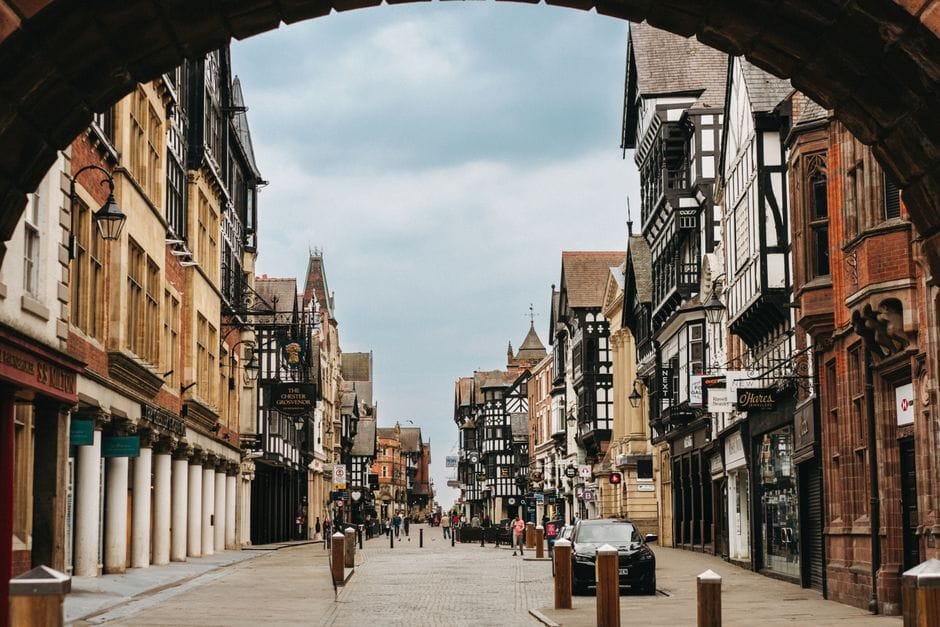
Shrewsbury sits inside a near-perfect loop of the River Severn, which is the first thing to know and the reason it has survived so intact. The river did the work of a wall, so the medieval street plan is still there to be walked, all timber gables and narrow passages the locals call shutts. Most people drive past it on the way to Wales. They are missing one of the best small towns in England.
Walking the old centre
Start with no plan. The tangle of streets between the square and the river rewards getting lost, and the names alone are worth it: Grope Lane, Dogpole, Wyle Cop, the steep hill where Henry Tudor is said to have stayed before Bosworth. The black-and-white buildings here are not restored film-set fakes; they lean and sag because they are five centuries old and still lived in.
Where to eat and browse
- The covered Market Hall is the heart of the place on a Saturday, with cheese, local cider, secondhand books and a coffee stall that draws a proper crowd.
- Independent shops cluster on Wyle Cop and around the square, the kind of butchers and delis that have vanished from most high streets.
- For lunch, the cafes along the river do the job; for dinner, book ahead, because the good places fill quickly at weekends.
Getting out of town
Shrewsbury makes an easy base for the Shropshire Hills. The Long Mynd and Carding Mill Valley are a short drive or a train hop to Church Stretton, and the views from the top stretch into Wales. Closer in, the riverside walk around the Severn loop, past the boathouse and the weir, takes a gentle hour and shows you why the town grew where it did.
The station is on the main line and well served from Birmingham and Manchester, so you can arrive by train and never need a car. Stay two nights if you can. One day for the streets, one for the hills, and an evening in a riverside pub watching the light go down over the water is about as good as an English weekend gets.