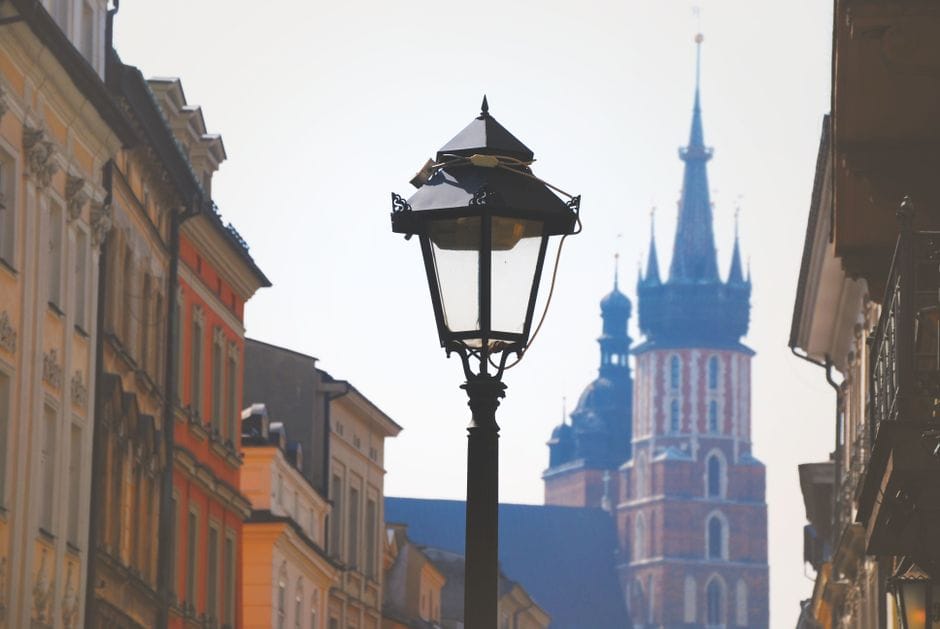
Krakow came through the war largely intact, which is why its old town still feels whole in a way that few central European cities do. At its heart is one of the largest medieval market squares in Europe, ringed by churches and townhouses and anchored by the long arcade of the Cloth Hall. In winter, under frost and low light, with the cafe windows steamed up, it is at its most atmospheric.
What to see
The main square, the Rynek, is the obvious start, but climb to Wawel hill for the royal castle and cathedral above the river, and wander the old Jewish quarter of Kazimierz, now full of cafes and bars but still heavy with history. Many visitors also make the sobering trip to Auschwitz, an hour or so away, which is difficult but, most feel, important to do.
Eating and drinking
- Eat pierogi, the stuffed dumplings, and the hearty soups that suit the cold; Polish food is built for winter.
- Duck into the cellar bars under the old town, warm vaulted rooms that come into their own when it is freezing outside.
- Warm up with a hot spiced beer or honey vodka, both local cold-weather staples.
The value
Krakow remains one of the better-value city breaks in Europe; food, drink and accommodation cost noticeably less than in western capitals, so a weekend here goes a long way. Cheap flights from the UK are plentiful, and the airport connects easily to the centre by train or bus.
Dress for real cold, because a Polish winter means business, with temperatures often well below freezing and snow likely. But that is the point: a frosted medieval square, a warm cellar bar and a plate of dumplings make a winter weekend that feels both special and remarkably easy on the wallet. Krakow rewards the traveller willing to brave the chill.