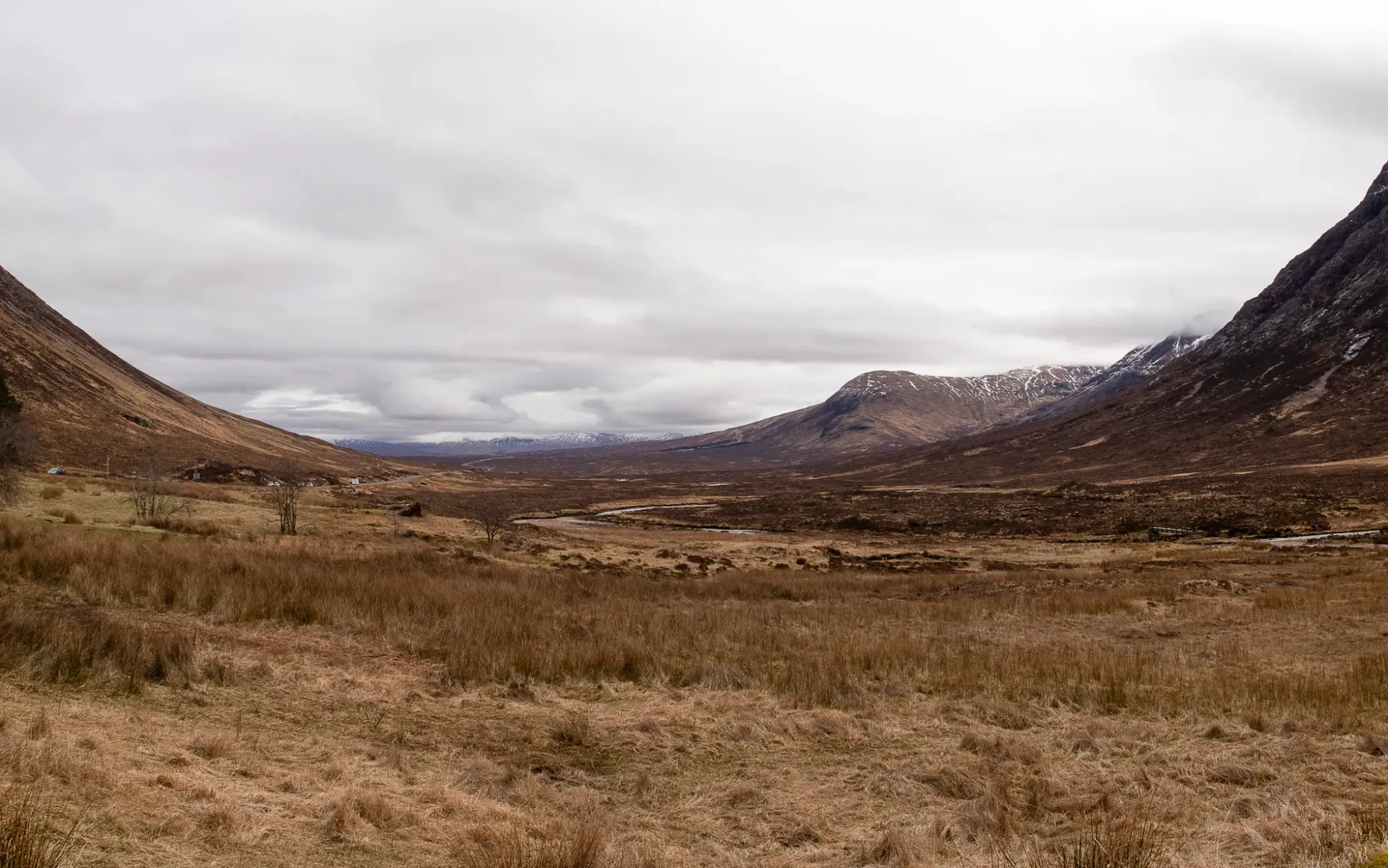
By the second week of July, Seville and Córdoba are routinely clearing 42°C, and half the group chats in London are trading airport-lounge photos from Faro and Palma. The other option — the one nobody mentions at the pub until someone's already done it — is heading north instead of south. Glencoe in July averages a daytime high of about 17°C, sometimes creeping into the low twenties on a genuinely good week, and it doesn't need a boarding pass. It needs a car, a train ticket, or a lot of patience with CityLink coaches, and about six hours from London. Nobody plans a Highlands trip the way they plan a week in Puglia, with a shortlist of beach clubs and a spreadsheet of restaurant bookings, and that's part of the appeal — there's very little to overthink beyond checking the forecast and packing the right boots. VisitScotland has reported record domestic summer bookings in recent years, and a growing share of that traffic is people who've simply worked out that a flight to Mallorca isn't worth the queue at security anymore. This is the same instinct, just followed all the way through.
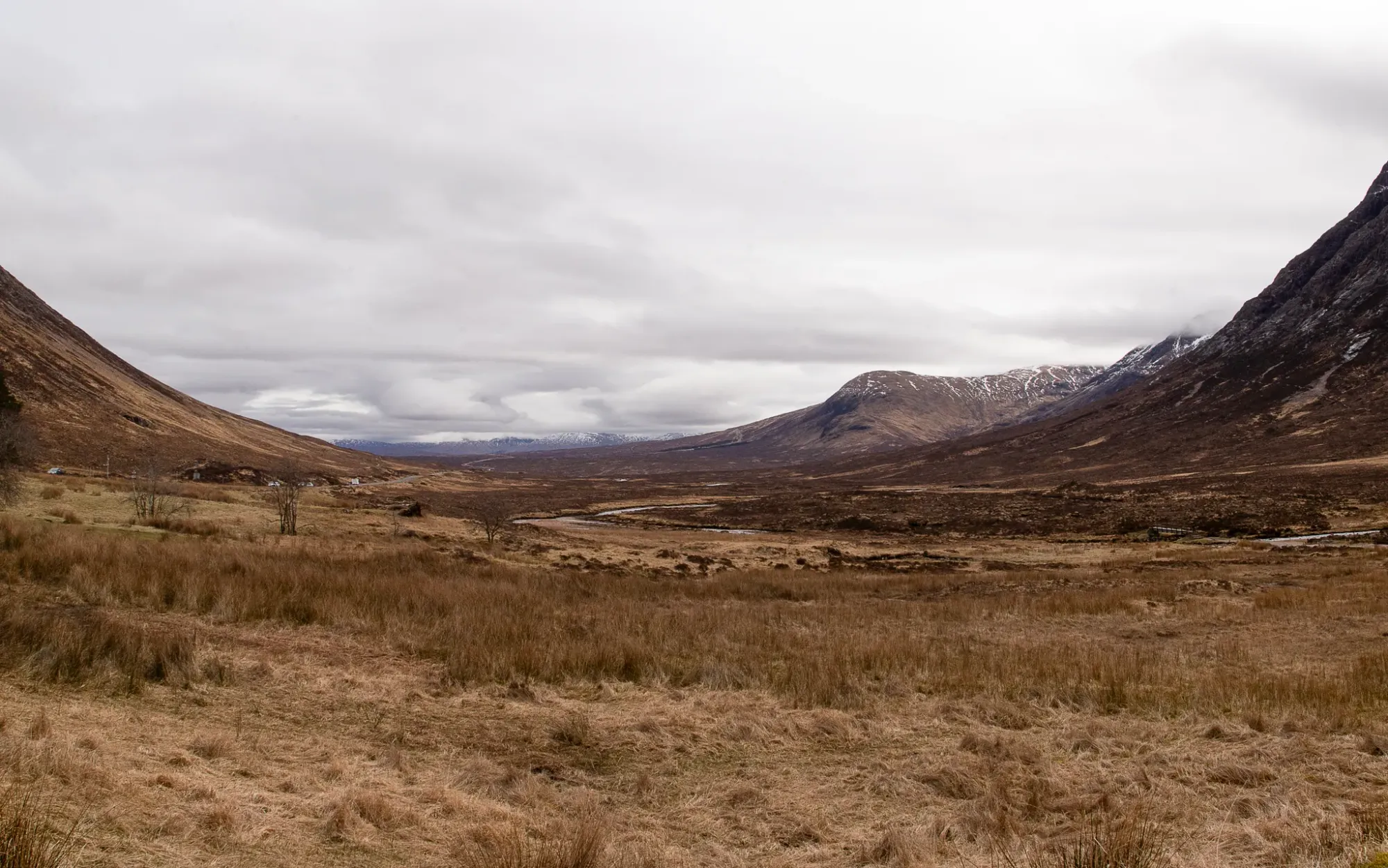
This isn't a novelty trip for people who've already done the Amalfi Coast twice. The Highlands in high summer are genuinely spectacular in a way that photographs undersell — Torridon's sandstone peaks catch a low orange light at 9pm that no filter reproduces properly, and at the height of summer you get close to eighteen hours of usable daylight in the far north, which changes what a single day of walking can actually cover. The catch, and there's always a catch with Scotland, is that the same damp air and short warm season that keep the glens green all year also breed the country's most infamous export after whisky: the Highland midge, and it does not care about your holiday.
Why the Highlands actually make sense this July
The comparison isn't close on paper. Seville's July average high sits around 36°C, with heatwave spikes well beyond that becoming closer to routine than exceptional in the last few summers. Fort William, by contrast, averages a daytime high around 18°C in July, and Inverness is similar. That's not a marginal difference — it's the gap between a holiday you spend chasing shade between 12 and 5pm and one where you can walk a Munro at 2pm without rationing water like it's an expedition. Locals will tell you a good simmer means dry spells between showers rather than wall-to-wall sun, and that's the honest pitch: you're not trading Spain's heat for Spain's light. You're trading it for cooler air, dramatically longer days, and scenery that most of Western Europe simply doesn't have — sea lochs, Munros, and glens that were carved by ice rather than tourism boards.
The daylight is the real selling point
In Inverness in early July, sunrise is before 4.30am and it doesn't get properly dark until after 11pm. Further north and west, on Skye or up towards Assynt, the gap is even longer. That means a walker can start a serious hill route at 9am, take their time, get weathered off a ridge and still have four hours of daylight left to find another plan. It's a different relationship with time than a Mediterranean trip, where the day is often built around avoiding the worst of the heat rather than making the most of the light.
Where to actually go
Skye gets the Instagram traffic, and in July that traffic is real — the Fairy Pools car park fills before 9am, and the single-track road past Elgol backs up behind campervans on a regular basis. Go to Torridon instead. The village of Torridon sits at the foot of Liathach and Beinn Eighe, two of the most dramatic mountains in Britain, and in July you can still get a parking space at the Coire Dubh Mòr car park without arriving at dawn. The Torridon Youth Hostel does bunk beds from around £25 a night, which is cheap for what's on the doorstep.
Glencoe is the obvious second stop, and it earns the reputation — the glen itself is a fifteen-minute drive end to end, but the walking off it is genuinely world-class. The Lost Valley track climbs through a narrow gorge into a hidden hanging valley where Clan MacDonald once hid stolen cattle, and it's manageable in half a day without technical gear. The Devil's Staircase, the toughest section of the West Highland Way, zigzags up out of the glen towards Kinlochleven and rewards the climb with a view back down Glen Coe that most first-time visitors say photographs never prepared them for. For scramblers who know what they're doing, the Aonach Eagach ridge is one of the most exposed routes on the British mainland, and it isn't a place to improvise — people die on it most years, usually from underestimating how fast the rock turns greasy in rain. The glen carries a darker history too: the 1692 massacre of the MacDonalds by government troops billeted among them happened here, and the National Trust for Scotland visitor centre covers it without sanitising it. None of that makes the place heavy to visit — if anything it adds a weight the empty scenery doesn't otherwise carry. Assynt, further north again, gets fewer visitors than either and has some of the strangest mountain profiles in the country — Suilven and Stac Pollaidh look like they were dropped in from somewhere else entirely, rising almost alone out of flat moorland instead of forming part of a continuous range.
- Torridon — for serious hill walking without the Skye crowds
- Glencoe — for accessible drama, fifteen minutes from the road at most viewpoints
- Assynt — for genuine solitude and the strangest skyline in Scotland
- The Cairngorms, further east, for gentler walking and a real chance of seeing red deer at close range
Getting there without a car
The West Highland Line from Glasgow Queen Street to Mallaig is regularly ranked among the world's most scenic railway journeys, and it's a normal ScotRail service, not a tourist novelty — though the steam-hauled Jacobite service that runs the Fort William to Mallaig leg over the Glenfinnan Viaduct does book out weeks ahead in summer and costs considerably more than the regular train. A standard off-peak return from Glasgow to Fort William runs a fraction of what a short-haul flight to Faro costs, and it drops you in the middle of the best walking country in Scotland rather than an airport forty minutes from anywhere useful.
From Mallaig, CalMac ferries run to Skye's Armadale, to the Small Isles, and further out to the Uists — a foot passenger fare to Armadale is under a tenner. For anyone without a car, buses fill the gaps: Scottish Citylink runs Fort William to Skye and Fort William to Inverness daily through summer, and the routes are genuinely used by locals, not just backpackers, which means they run early and run late.
Wild camping is legal, and that changes the maths
Under the Scottish Outdoor Access Code, wild camping is legal on most unenclosed land, a right that doesn't exist in England or Wales outside a handful of specific areas like Dartmoor. That's not a loophole — it's a deliberate, long-standing part of Scottish access law, and it means a week in the Highlands doesn't have to involve a single hotel booking if you're prepared to carry a decent tent and follow the leave-no-trace rules properly: pitch late, leave early, no fires on peat, and take every scrap of rubbish back out with you.
Loch Lomond and the Trossachs National Park is the one major exception — camping management byelaws restrict where you can pitch between March and September, and you'll need a permit in the designated zones. Everywhere else covered in this piece, standard wild camping rules apply, and that single fact does more to make a Highlands trip affordable than any flight deal ever will.
The midges, honestly
This is the part every glossy tourism campaign skips, and it shouldn't be skipped.
The Highland midge — Culicoides impunctatus, if you want the Latin — breeds in wet peaty ground and is at its worst from late June through August, precisely the window when everyone's trying to visit. They don't bite in strong wind or bright sun, but they come out in force at dawn, at dusk, and on the still, overcast days that are extremely common in a Highland summer. Anyone who's tried to eat dinner outside a bothy on a calm July evening without protection understands exactly why Scots don't romanticise their own midsummer the way outsiders do. The Scottish Midge Forecast, run by APS Biocontrol, publishes a daily risk map through the season and is worth checking before you commit to a campsite. Smidge, a Scottish-made deet-free repellent, is the one most walkers and ghillies actually rely on rather than the imported alternatives sold in most outdoor shops — a head net earns its keep too, however daft it looks in photos.
None of that should put you off. It should make you pack properly.
What actually goes in the bag
- A head net and repellent — non-negotiable for anywhere near still water or forest edge at dawn or dusk
- Proper waterproofs, not a showerproof jacket — the Highlands can deliver four seasons in an afternoon even in July
- A midge-proof tent with fine mesh, if you're wild camping — standard mosquito mesh lets midges straight through
- Layers rather than one warm jacket, since 12°C mornings and 19°C afternoons are both normal on the same day
Book the Torridon Youth Hostel or a Fort William guesthouse for the nights you want a proper shower and a midge-free room, and camp the rest. That mix — not full wild camping, not full hotel-hopping — is what most experienced Highland walkers actually do, whatever the more purist accounts suggest online.
Faro will still be there in September, considerably cooler and considerably less booked out. The Highlands in July won't wait for anyone's schedule the same way — the light is longest right now, and it's gone by October.