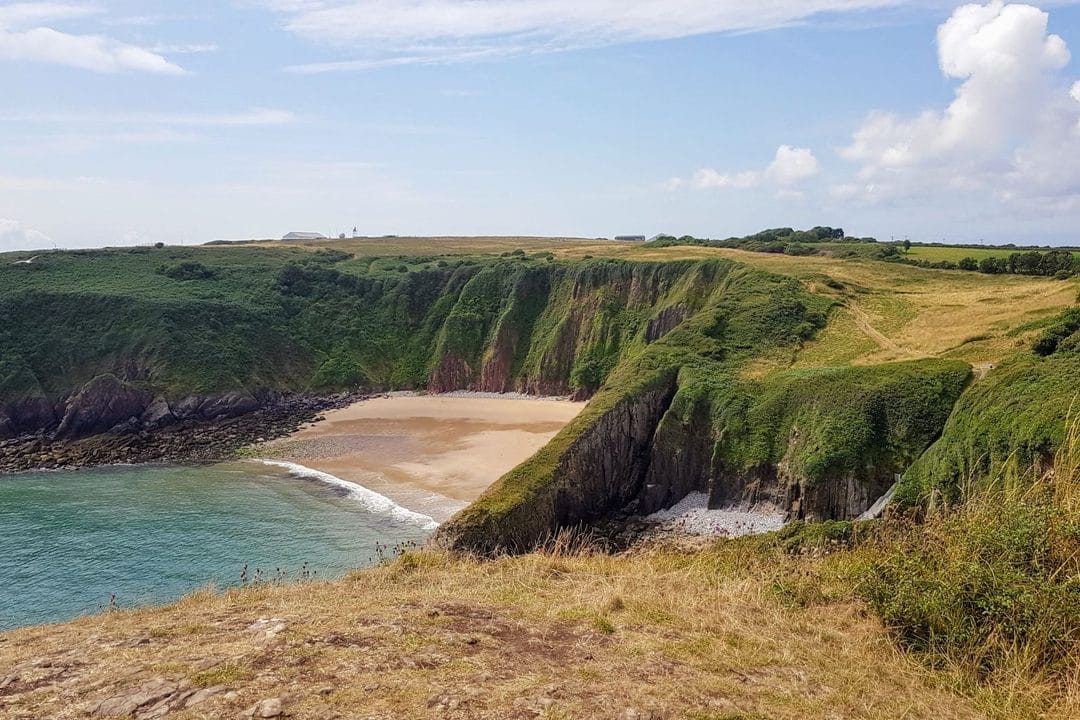
Cornwall gets the headlines and the traffic jams. Drive a few hours further round the Bristol Channel, though, and you reach a stretch of Welsh coastline that does almost everything Cornwall does — the turquoise water, the cliff paths, the seaside chip shops — with a fraction of the crowds. Pembrokeshire is Britain's only coastal national park, and by late June it hits the sweet spot: warm enough to swim, not yet jammed with the school-holiday rush that descends from the third week of July.
Why west Wales beats the south-west in July
The honest reason most people skip Pembrokeshire is the drive. From London it's a solid five hours, and there's no fast rail link past Swansea. But that distance is exactly what keeps the beaches breathable. Barafundle Bay, regularly voted one of the best beaches in Britain, sits at the end of a half-mile walk from the nearest car park — and that short hike filters out the crowds in a way no Cornish cove manages.
The water is the other surprise. Thanks to the Gulf Stream, sea temperatures off Pembrokeshire creep up to around 17 or 18 degrees by mid-July, which sounds bracing but is genuinely swimmable for a good half-hour. Pack a thin wetsuit if you're taking children in, and nobody will be hauled out blue-lipped after five minutes.
The beaches that earn the journey
Not all of them are equal, and the famous ones aren't always the best on a given day. A few that consistently deliver:
- Barafundle Bay — the postcard one, golden sand backed by dunes and pines, reached on foot from Stackpole Quay. Worth every step.
- Marloes Sands — vast at low tide, with rock formations that look prehistoric; check the tide times before you go, because at high water there's almost no beach left.
- Whitesands Bay near St Davids, the surfers' choice, with a proper lifeguard service through summer.
- And Freshwater West, wild and Atlantic-battered, better for watching the swell than for a gentle paddle — among others scattered along the coast path.
If you only have one day and the tide is kind, make it Barafundle. The walk in, the pine-fringed descent, the lack of a single ice-cream van — it's the closest thing Britain has to a Mediterranean cove without the easyJet flight.
St Davids: Britain's smallest city is the obvious base
St Davids has a cathedral, a couple of thousand residents, and city status thanks to that cathedral — which makes it the smallest city in the UK and a genuinely charming place to sleep. From here you're within twenty minutes of half a dozen beaches and the start of some of the best stretches of the 186-mile Pembrokeshire Coast Path. The boat trips out to Ramsey Island to see seals, porpoises and seabirds leave from nearby Whitesands and St Justinians.
What it costs and where to stay
This isn't a budget-buster, but the good accommodation books out early for the school holidays, so late June is your window for last-minute deals. A decent B&B in or around St Davids runs roughly £90–£140 a night in summer; a family-sized cottage for a week sits anywhere from £700 to well over £1,500 depending on how close to the water you want to be. Camping is where Pembrokeshire shines for value — sites near the coast charge around £25–£40 a night for a pitch, and several sit a short walk from the sand.
Two practical warnings. Many of the best beach car parks are National Trust-run, so a membership pays for itself fast if you're touring several — otherwise budget £6–£8 a day per car park. And the coast path, gorgeous as it is, runs along genuine cliff edges with no railings; it's no place to let small children wander off ahead, however well-behaved they usually are.
Go now, before the caravans arrive. A weekday in late June at Barafundle, with the tide out and the pines casting shade onto the sand, is about as close to having a great British beach to yourself as the calendar allows.