Everyone at Stockholm Arlanda in the second week of July seems to be heading the same direction, and it isn't Gotland. They're queuing for Split, for Palma, for the kind of heat that makes you regret the flight before you've even landed. Meanwhile the 06:30 ferry out of Nynäshamn to Visby has spare seats, the crossing costs less than a tank of petrol, and nobody on board needs to hire a car when they arrive.
Why Gotland works without wheels
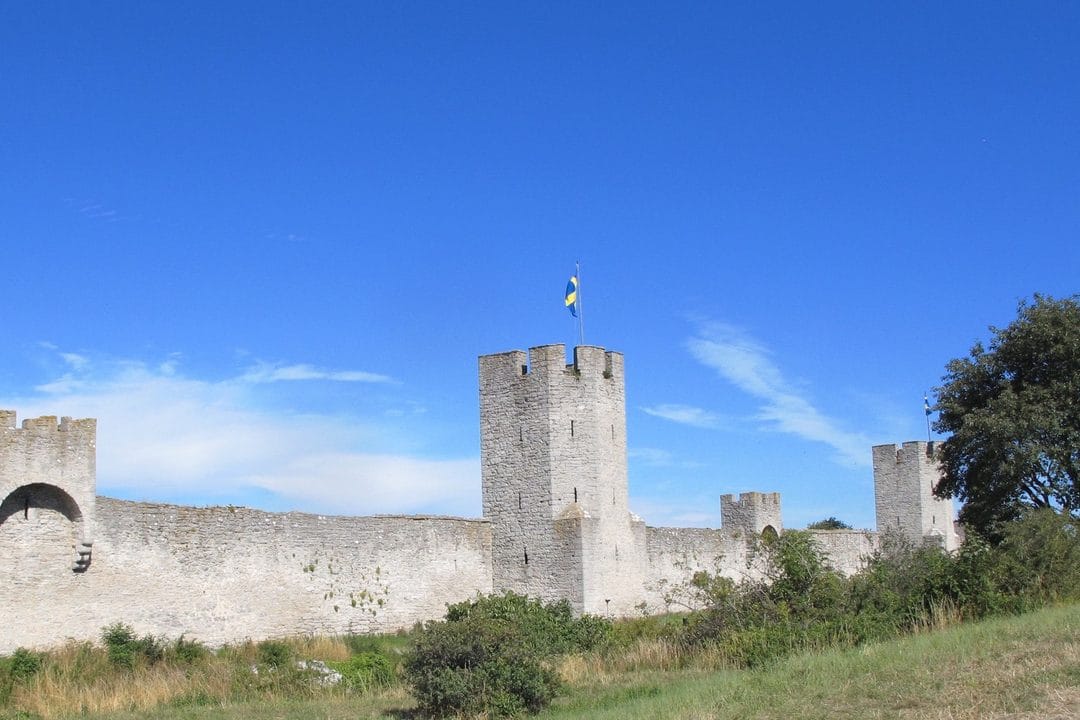
Visby itself is walkable end to end in under twenty minutes — the medieval town wall, 3.4 kilometres of it still standing, wraps the old centre so tightly that a rental car becomes a liability rather than a convenience. Cobbled lanes barely fit a bicycle, let alone a Volvo estate, and the town's forty-odd towers make a decent afternoon's wander on foot alone. Hire a bike instead: Gotland Cykeluthyrning in Visby charges around 150 SEK a day, and the flat limestone plateau that makes up most of the island means even a mediocre cyclist can cover 40 kilometres before lunch without feeling it in their legs the next morning. Further out, villages like Lärbro and Fårösund barely register a car at all outside the ferry crossing to Fårö, where Ingmar Bergman lived out his last four decades — the island he chose specifically because so few people bothered to visit it. The Fårö crossing itself is free and takes six minutes, running every twenty minutes through the summer, and it's easy to forget you've left Gotland at all until the raukar sea-stacks at Langhammars come into view. Pack a picnic before boarding; there's a single seasonal café near the ferry terminal and it closes by five most evenings.
Skip the car hire altogether if you're staying within Visby and its immediate coastline — the bus network run by Kollektivtrafiken Gotland reaches every town worth seeing, and at roughly 40 SEK a ride it undercuts fuel costs within two days. The buses run less often on Sundays, which catches out first-time visitors more than anything else on the island; check the timetable the night before, not the morning of. A car does earn its keep if you're determined to reach the Lauter stone formations near Slite or the raukar sea-stacks at Langhammars in a single afternoon, but for anyone staying more than four nights, the bike-and-bus combination covers nearly everything that matters.
The crowd math nobody mentions
Almedalen week aside — the political festival that briefly triples Visby's population every summer — Gotland in July still runs at a fraction of the density you'd find on a Greek or Croatian island of comparable size. Ryanair and easyJet don't fly here. That single fact does more to keep the crowds manageable than any conservation policy, because it means the visitors who do arrive are mostly Swedish, mostly driving up from Stockholm on the ferry, and mostly gone by the time the shoulder season starts in late August.
The town wall at sunset draws a crowd, but it's the kind of crowd that thins out within five minutes of walking past the Söderport gate — nothing like the queue for the Colosseum or the shuffle along Dubrovnik's Stradun. Book the Fenomenalen Science Center or the Gotlands Museum a day ahead in peak weeks and you'll rarely need to; walk-up tickets are the norm, not the exception. Restaurants along Strandgatan do fill up by eight in the evening, so book those specifically, even if nothing else on the island requires it.
Öland: the quieter alternative twenty minutes further
Cross the Öland Bridge from Kalmar — at 6 kilometres, still the longest bridge in Sweden — and the whole character of the trip changes. Where Gotland has a proper old town, Öland has almost none: it's stone walls, wind farms and the vast limestone barren of Stora Alvaret, a UNESCO World Heritage landscape that looks more like Iceland's highlands than anything you'd expect this far into the Baltic. Public buses (KLT, the Kalmar county operator) cross the bridge roughly hourly and run the length of the island for around 60 SEK a trip, though renting a bike in Borgholm is the better way to actually see Stora Alvaret — the reserve's gravel paths aren't built for buses. Expect to pay around 130 SEK a day for a bike from one of the harbourside shops, slightly less than Gotland's rates, since the terrain is flatter still and turnover is higher. Windmills — genuine 19th-century ones, not the wind farms further south — dot the roadside in clusters near Löttorp, and most are freely accessible without so much as a ticket booth in sight. Öland's stone walls, over 3,000 kilometres of them criss-crossing the island, were built from the same limestone as Stora Alvaret and give the whole place a patchwork look from any of the low ridges near Halltorp.
Borgholm Slott, the ruined royal castle above the town, charges 120 SEK entry and is worth every krona for the view alone: from the ramparts you can see clear across the sound on a good day, past the wind turbines to the mainland. Öland's real draw, though, is the birdlife — Ottenby, at the island's southern tip, sits on one of Europe's busiest migratory flyways, and even in July, outside the main migration windows, the bird observatory logs dozens of species a day. Solliden Palace, the summer residence of the Swedish royal family, sits a short bus ride from Borgholm and opens its gardens to the public for 145 SEK — skip the palace interior tour unless you're genuinely curious about Swedish royal history, but the gardens alone justify the ticket.
What this actually costs
A week doing Gotland and Öland by ferry, bus and bike runs noticeably cheaper than the equivalent week in the Balearics or the Cyclades, mostly because accommodation outside Visby's old town drops fast. Expect roughly 900–1400 SEK a night for a decent guesthouse in Borgholm or in Gotland's smaller towns like Fårösund, against 1800 SEK-plus for anything central in Visby during Almedalen week. Food is where Sweden's reputation for expense actually holds up — a casual dinner for two rarely comes in under 500 SEK — but the saffron pancake at any roadside café on Gotland, served with cloudberry jam, is the one splurge worth budgeting for regardless.
Book the Destination Gotland ferry at least three weeks out if you're travelling in the first half of July. Prices roughly double in the ten days around Almedalen, and cabins on the overnight crossing sell out first. The daytime crossing from Nynäshamn, by contrast, rarely sells out completely — book that one a week ahead and you'll usually still find a seat.
How much cooler, exactly
Visby's average July high sits around 20-21°C, with sea temperatures in the low-to-mid teens — genuinely swimmable by the second half of the month, if not exactly Mediterranean. Palma, by comparison, regularly hits 30-31°C in the same weeks, and inland Croatia further still. That eight-to-ten-degree gap is the whole argument: it's the difference between a beach day that ends naturally around 4pm because the heat's become too much, and one that runs comfortably until the light fades close to 10pm this far north. Öland, being flatter and more exposed to the wind coming off the Kalmar Strait, runs a degree or two cooler again, which matters more than it sounds if you're cycling the length of Stora Alvaret at midday.
Food, and what's actually worth ordering
Gotland lamb turns up on almost every menu on the island, grazed on the same limestone grassland that makes the cycling so easy, and it's genuinely worth ordering over anything imported. Asparagus and new potatoes dominate June menus and linger into early July; by late July, wild chanterelles start appearing at the Visby farmers' market on Stora Torget, sold straight from baskets by foragers who were in the forest that same morning. Kalmar, on the mainland side before the Öland Bridge, does a version of smoked Baltic herring worth the detour alone — smörgåsbord-style, with dill and sour cream, at any of the harbourside cafés near the castle.
Getting there from the UK
There's no direct route, which is exactly why it stays quiet. Fly into Stockholm Arlanda with SAS or Norwegian, take the train south to Nynäshamn (about an hour, roughly 150 SEK), then the ferry across — a crossing that takes anywhere from three to five hours depending on the route and the season. Fly to Kalmar instead if Öland is the priority; BRA Braathens Regional operates the Stockholm–Kalmar hop, and from the airport it's a twenty-minute taxi or a bus to the bridge.
Do the whole thing without a rental car and you save more than money. You save the two hours a day that car-hire trips lose to parking, fuel stops and route-planning — hours that go instead to the kind of aimless coastal walking these islands are actually built for.
Where it falls apart
None of this works if you're travelling with more than two people and heavy luggage, or if your schedule depends on seeing both islands in under four days — the bus and ferry connections between Gotland and Öland aren't direct, and routing through Kalmar or Stockholm again adds the best part of a day either way. Families with small children and a boot full of gear are usually better off flying into Kalmar and renting a car there for Öland alone, then treating Gotland as a separate trip entirely.
The bit worth remembering
Rain rolls in off the Baltic with almost no warning on both islands, even in July, so pack a proper shell rather than trusting the forecast on your phone.
Neither island tries to be the Mediterranean, and that's precisely the point — Gotland and Öland offer limestone coastlines, medieval stone and long light evenings without the 35-degree heat that's turned so much of southern Europe's July into an exercise in staying indoors until sunset.