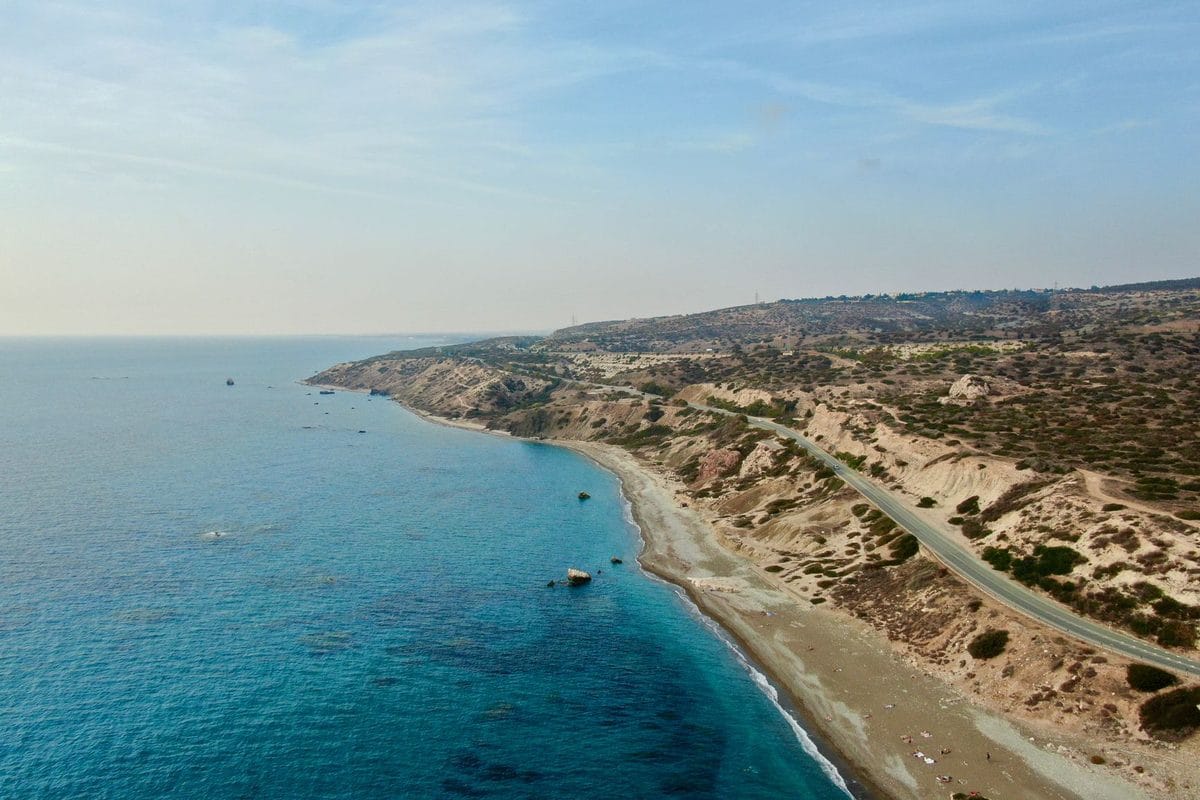
At Coral Bay, just south of Paphos, the sea in the last week of October sits at a genuinely swimmable 23–24°C, while the beach itself has emptied out to a scattering of locals walking dogs and the odd German couple who clearly read the forecast properly. Most of the UK is already reaching for the heating by then. Cyprus, sitting further south and east than any other Mediterranean island the British market flies to directly, keeps its water warm for weeks after Crete, Rhodes and the Balearics have tipped into wetsuit territory, and it's a quirk of geography that most travel guides mention in passing and almost none actually build a trip around. The island isn't hiding some secret cooler microclimate, either — daytime air temperatures still reach the mid-to-high twenties into the second half of the month, and the warmth of the sea comes down to a shallow continental shelf and a long, hot summer that simply takes weeks longer to bleed out than it does further north in the Aegean. Paphos and Larnaca, the two airports British holidaymakers actually land at, both sit a short walk from beaches that are still warm and now almost entirely free of the crowds that make August here a slog. That's the whole case for going now rather than filing Cyprus away for next June: better sea, better prices, and a version of the island that behaves nothing like the one on the sunburnt postcards.
When to go, and what it costs to get there
British Airways, easyJet, TUI and Jet2 all run direct routes from London, Manchester, Birmingham and Stansted to Paphos or Larnaca, and the flight itself takes just under five hours — short enough for a long weekend, generous enough for a fortnight. Book a return for the second half of October and you're typically looking at £120–£180 from Gatwick or Stansted, against £280–£350 for the identical route in August. Hotels track the same curve: a four-star half-board room in Paphos that costs £150 a night in July drops to £70–£90 by late October, and villa rental sites show similar 35–40% discounts once the school-holiday premium disappears.
Aim for the first three weeks of October if swimming is the priority. The sea holds its summer heat comfortably until around the 20th, after which it cools by roughly a degree a week, and by early November the difference is enough to notice within a few minutes in the water. Anyone chasing hiking weather over beach weather can push later into the month, when daytime temperatures settle into the low-to-mid twenties and the Troodos foothills start turning colour.
Paphos: mosaics, harbour and a coastline that's finally quiet
Base yourself in Paphos rather than Ayia Napa for an October trip — that's the better call by some distance, and not a close one. The House of Dionysos and its neighbouring villas, a UNESCO-listed complex of Roman floor mosaics depicting the god of wine surrounded by satyrs and leopards, sit almost empty by mid-month, and you can actually stand and study the detail on the Four Seasons mosaic rather than shuffle past it behind a tour group. A ten-minute walk from there, the medieval harbour castle catches a proper golden-hour light once the summer haze has cleared, and the fish tavernas along the harbour front — Ta Piatakia and Seven St Georges among the better ones — stay open well into the month, serving meze for around £15–£20 a head with none of the queuing that defines a July evening here. The Tombs of the Kings, an underground Hellenistic and Roman necropolis carved into rock just north of town, is worth the £2.50 entry fee, and it's best done at 9am when the gates open rather than at midday, because October's sun still has real strength to it even once the evenings have turned pleasant. Coral Bay itself, a fifteen-minute drive south, is the easiest swim of the whole trip: sun loungers are still out, the beach bars are still serving cold Keo lager, and you'll share the water with perhaps two dozen other people rather than two thousand.
The Akamas Peninsula, before the last road runs out
North-west of Paphos, the tarmac gives up entirely at the edge of the Akamas Peninsula, Cyprus's last genuinely undeveloped stretch of coast and a protected national park since the 1980s. The Blue Lagoon at its tip is only reachable by 4x4 track or, more sensibly in October, by one of the half-day boat trips that leave from Latchi harbour — expect to pay around £30–£35 per person, considerably less than the August rate, for a boat carrying maybe a third of the passengers it would in peak season. The water here runs a startling turquoise over white limestone shelves, and swimming it in late October without fighting for space at the rail is reason enough on its own to come. Inland from the coast, the Aphrodite Nature Trail loops seven kilometres through juniper and Cyprus cedar with genuinely dramatic sea views, and October's cooler air makes it walkable at midday, which is more than can be said for July. Bring proper shoes regardless of season — the terrain is rockier than the gentle name suggests, and the last stretch down to the water involves loose scree that catches out anyone in sandals.
Up into the Troodos Mountains
An hour and a half's drive inland, the Troodos range sits roughly ten degrees cooler than the coast, and by late October the plane trees around villages like Omodos and Platres are turning a proper rust-and-gold that most people don't associate with Cyprus at all. Omodos itself is built around a monastery said to hold a fragment of the crucifixion cross, but the real draw for most visitors is the row of small family wineries along its cobbled main street, where you can taste Commandaria — a sweet dessert wine with a documented history stretching back to the Crusades and one of the oldest named wines still in commercial production anywhere — for the price of a couple of glasses, usually under £10. Kykkos Monastery, higher up and founded in the eleventh century, holds an icon of the Virgin Mary that tradition attributes to St Luke and that has never, by monastery rule, been shown uncovered to visitors. Whatever you make of that particular legend, the building itself earns the drive: gold mosaics, frescoed courtyards, a small but genuinely absorbing museum, and a switchback road up that gives some of the best framed views of the coastline you'll get anywhere on the island. Stay a night inland at Omodos rather than only day-tripping from the coast — it's a small recommendation but the right one. The village empties out after the coach parties leave by mid-afternoon, and an evening there, with quiet lanes, a single restaurant terrace and mountain air carrying a real chill after dark, is a different Cyprus entirely from the one most British visitors ever see.
Larnaca, Nicosia and the line through the middle
Larnaca gets treated as a mere airport town by most itineraries, which sells it short. Its Salt Lake, a flat expanse just south of the runway, starts drawing its first flamingos back from their summer grounds around late October, arriving in growing numbers through November — time it right and you'll catch the early flocks wading the shallows against a backdrop of the domed Hala Sultan Tekke mosque, one of the holiest sites in Sunni Islam outside Mecca and Medina. The town's own old quarter, centred on the seafront Finikoudes promenade and the Byzantine-era Church of Saint Lazarus, rewards an unhurried afternoon far more than its reputation as a package-holiday staging post suggests. An hour north, Nicosia remains the only divided capital city left in the world, split since 1974 along a UN-patrolled Green Line that you can now walk across on foot at the Ledra Street crossing with nothing more than a passport check. The old town on the Republic side — the Büyük Han caravanserai, now full of small craft workshops and coffee shops, and the Venetian walls that ring the centre — makes a genuinely strange and worthwhile half-day, not least because so few British visitors bother with it at all.
What October doesn't give you
The water parks shut first.
WaterWorld in Ayia Napa and most of the resort's beach-club scene wind down by the end of September, and if a loud, late-night stretch of coast is what you actually want from a Cyprus holiday, October is the wrong month by some margin — you'd be better off coming in July and accepting the heat and the crowds that come with it. Plenty of smaller coastal restaurants along the Protaras and Ayia Napa strip pull their shutters down for the season by mid-month too, so a trip built entirely around that stretch of coast will feel half-abandoned rather than pleasantly quiet. The trade-off is real, and it's worth knowing before you book rather than discovering it on arrival.
Budgeting a week
A realistic week for two, flying from a London airport, landing in Paphos, with a rental car and a mix of coastal and inland nights, comes out at roughly £900–£1,300 all in: £250–£360 for flights, £490–£630 for seven nights split between a Paphos hotel and an Omodos guesthouse, £120–£150 for a week's car hire, with rates in October running at roughly half the August peak, and £150–£200 for meals, wine tastings and the Akamas boat trip. That's a genuine saving of several hundred pounds against the same itinerary in August, on top of the actual, measurable improvement in what the trip feels like to be on.
None of this requires waiting for a cheaper year or a better deal to show up. The flights are already running, the sea is already the right temperature, and by the time most of Britain works out that Cyprus in October beats Cyprus in August, the villages along the Troodos ridge will have gone quiet again for winter.