By the second week of September, the ferry queue at Piraeus that swallowed three hours of your life in August has shrunk to something you can actually stand in. The water off Naxos is still warm enough to swim without flinching — 24°C, sometimes higher into early October — and the beach bars that spent the summer charging €14 for a mediocre spritz have started dropping their prices to keep the last regulars happy. This is the window that people who actually live on the Cyclades wait for all year, and it has almost nothing to do with the islands British travellers usually book. Santorini and Mykonos dominate every "Greek islands" search result, and for good reason — the sunsets are real, the marketing budgets are bigger. But they're also the two islands where September barely changes anything: cruise ships still dock most days, Oia's caldera path still fills with tripod-wielding crowds an hour before sunset, and a decent room in Fira still runs €200 a night even after the August peak. If you want the version of the Cyclades that actually feels like a holiday rather than a queue, you need Naxos, Paros and Milos — three islands within a two-hour ferry hop of each other that come into their own precisely when everyone else has gone home.
Naxos: the island that never needed the tourists to survive
Naxos is the largest of the Cyclades and, unlike its smaller neighbours, has a genuine agricultural economy — potatoes, cheese, citrus — which means it was never entirely dependent on tourism and doesn't behave as though it is. The old town spills down from a Venetian kastro, and Portara, the freestanding marble doorway from an unfinished 6th-century BC temple, sits on its own islet connected by a short causeway that makes for the best sunset photo in the Cyclades that isn't in Oia. Plaka Beach, five kilometres of pale sand backed by low dunes, is where families and campervans settle in for the day; by mid-September the sunbed rows have thinned enough that you can pick your own spot rather than take whatever's left.
Book a room in Naxos Town rather than out at the resort strip near Agios Prokopios — you'll pay less, roughly €70–110 a night for a decent three-star in September against €150+ in August, and you'll be a five-minute walk from tavernas that still cook for locals as much as visitors. Try the graviera cheese and the local potatoes at Metaxi Mas, tucked into an alley behind the market street; it's the kind of place that doesn't bother with an English menu because it's never needed one. Hire a car for at least one day and drive up into the Tragaia valley, where olive groves give way to Byzantine churches and mountain villages like Apeiranthos that see a fraction of the coastal footfall.
Paros: the compromise island that stopped being a compromise
Paros used to get pitched as the sensible alternative to Mykonos — close enough to the party scene to borrow some of the energy, calm enough that you could sleep before 2am. That reputation undersells what Paros actually offers now that its own identity has caught up with the marketing. Naoussa, the fishing-village-turned-boutique-harbour on the north coast, has become genuinely stylish without losing the working fleet that still lands its catch at the same quay every evening. September is when the harbour restaurants — Barbarossa and Sigi tou Kosmou among the better ones — stop needing reservations made three days in advance and start taking walk-ins again.
Kolymbithres beach, a scatter of granite boulders sculpted into coves by wind and sea, is the postcard image most people don't realise is Paros rather than somewhere more famous. Windsurfers and kitesurfers gather at Golden Beach on the east coast, where the meltemi wind — the same north wind that makes August miserable for anyone trying to read a book on a sunbed — settles into a steadier, more manageable rhythm by September, good for the sport rather than against it. Skip the day trip to Antiparos unless you specifically want to see the stalactite cave; the ferry crossing takes ten minutes and costs €2, and it's worth doing once, but Antiparos itself is smaller and quieter than Paros in a way that reads as "nothing much here" rather than "hidden gem."
Milos: what Santorini looked like before it became Santorini
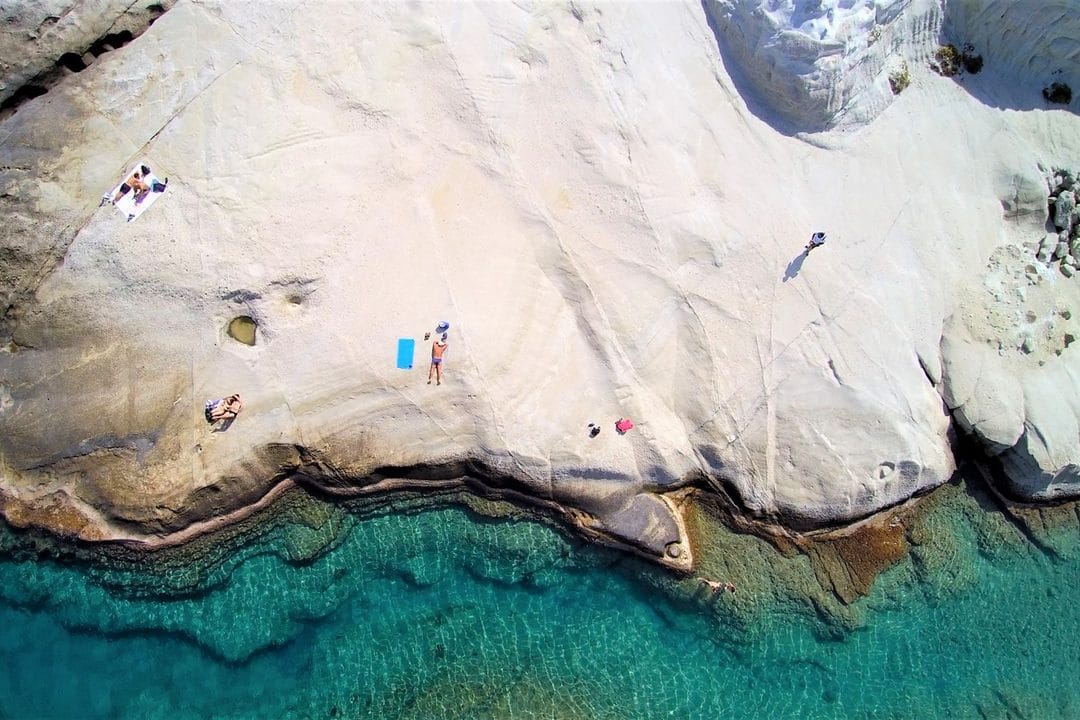
Milos is volcanic, like Santorini, and it shows in the landscape rather than in the crowds — over 70 documented beaches, most reachable only by boat or a genuinely committed hike, carved from the same geology that gave the island its centuries-old mining industry (obsidian, then later sulphur and bentonite, still extracted today). Sarakiniko, the lunar white rock formation on the north coast, gets photographed constantly and still isn't busy, because there's simply more coastline than there are people to fill it.
The catch, and there's always one: Milos has fewer flights and a less frequent ferry schedule than Naxos or Paros, so you need to plan the logistics rather than wing them. Sky Express and Olympic Air run a handful of weekly flights from Athens in September (roughly 45 minutes, €70–120 depending on how far ahead you book), which is worth the extra cost over the five-hour conventional ferry if your time is tight. Once there, renting a small boat for a day — no licence required for anything under 30hp — is genuinely the best way to see the coastline properly; expect to pay €80–120 for a half-day including fuel, shared between three or four people it's cheaper than a single organised boat tour.
Getting between the three
- Blue Star Ferries and SeaJets run the conventional Piraeus–Naxos–Paros routes daily through September, with journey times of 3.5–5 hours depending on the vessel
- Naxos to Paros is a 30–45 minute hop, often several sailings a day — don't overthink the booking, just check the timetable the morning you want to travel
- Paros to Milos runs less frequently, typically once or twice daily, and does need booking a day or two ahead in September
- Ferryhopper and Direct Ferries both show live schedules; prices for the short inter-island legs run €15–35 depending on the operator and boat speed
What actually changes when the calendar flips to September
The obvious shift is the crowds, but the more useful one is the pricing. Hotel rates across all three islands drop 25–40% from their August peak once the local school term starts back in Greece around the first week of the month, and that discount holds steady through most of September before climbing slightly again for the final EU-wide flurry of half-term breaks in late October. Restaurant owners who spent July and August turning tables twice an hour start cooking dishes that take longer, because they finally have the kitchen capacity to do it. Beach bars that ran a fixed, tourist-facing menu all summer start bringing back the dishes they actually eat themselves. None of this means Naxos, Paros and Milos are secret. Greek families and repeat visitors from Germany and Scandinavia already know this window well, and the better tavernas do get busy at weekends even in late September. What you're avoiding isn't people entirely — it's the specific crush of a Santorini caldera path in the last week of July, or a Mykonos beach club charging €400 for a sunbed you didn't reserve. The Cyclades in September are still full of life. They're just full of life at a pace that lets you actually notice it.
When to book, and when not to bother
Flights from the UK get trickier after mid-September, when the direct easyJet and Ryanair seasonal routes into Santorini and Mykonos start winding down for winter — Naxos and Milos have never had direct UK flights in the first place, so routing through Athens is standard regardless of the month. Book the Athens leg for a morning arrival if you can; it gives you a buffer to catch a same-day ferry onward rather than an overnight stay you didn't plan for. The first two weeks of September are the sweet spot: sea temperatures haven't dropped, most restaurants and smaller hotels haven't started their end-of-season closures, and the discount pricing is already fully in effect.
Wait until October and you'll save more money, but you'll also start losing the option — family-run tavernas, small boat-hire outfits and some guesthouses close for the winter as early as the first week of the month, particularly on Milos where the tourism economy is thinner to begin with. September, not October, is where the maths and the experience actually line up.