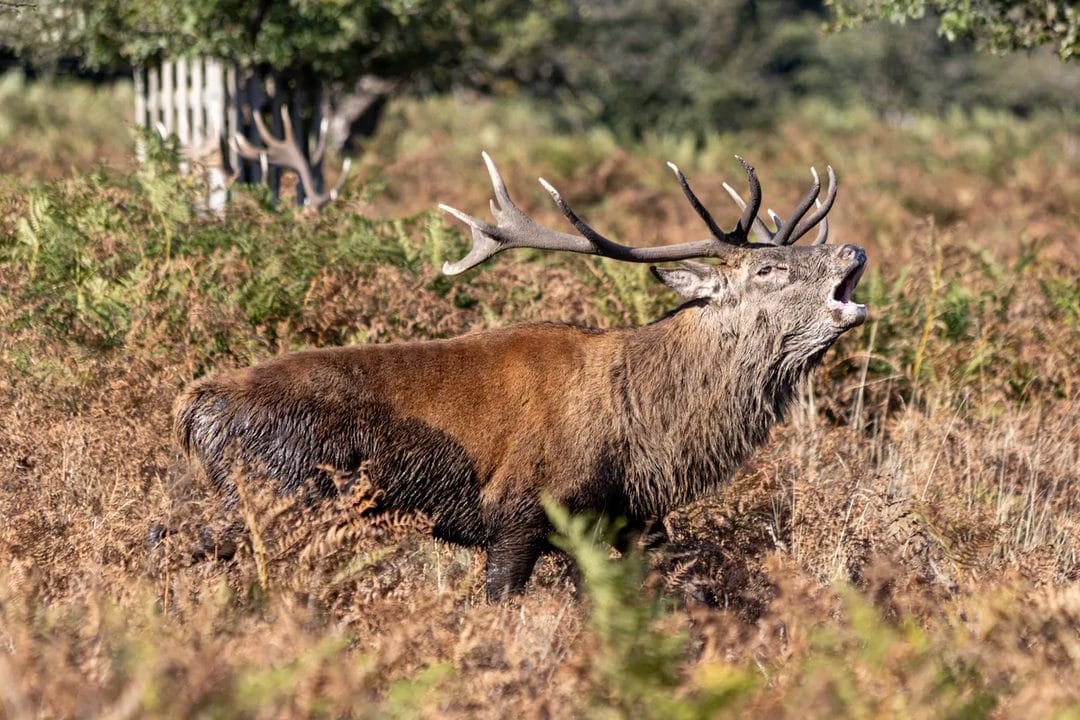
At half past six on an October morning, Richmond Park is nearly silent except for one sound: a stag roaring somewhere in the mist off Sawyer's Hill. It's a low, guttural bellow that carries for half a mile, and it stops every dog-walker within earshot dead in their tracks. A second stag answers from further off, closer to the ponds, and for a moment the whole park seems to be holding its breath waiting for a third. This is the rut, the few weeks each autumn when red and fallow deer compete for mates, and for a handful of weeks it turns some of Britain's quietest corners into genuine wildlife theatre. It's free, unticketed, and fifteen minutes from a London Underground station in Richmond Park's case, or a five-hour drive into wild Exmoor if you want the version with no fences at all. Either way, nobody organised this for tourists — you're watching something that would happen whether or not a single visitor showed up, which is precisely why it doesn't feel like a managed attraction.
The rut is the headline act, but it isn't the only one. Late September through November is when three separate natural events overlap across Britain: the deer rut peaks, salmon begin fighting their way upstream to spawn, and the first starlings start gathering into murmurations before the truly vast winter flocks arrive. Plan a long weekend around any one of these and you'll have a good trip. Plan it around the overlap — which is entirely possible in Perthshire or the Southwest — and you get something closer to a proper wildlife holiday without leaving the country or paying for a safari.
The deer rut: where to go and when
The rut runs roughly from late September to early November, with the noisiest, most active fortnight usually falling between the last week of September and the third week of October — though it shifts year to year depending on temperature, since a cold snap tends to bring the peak forward. Richmond Park and Bushy Park, both in southwest London, hold around 630 and 320 free-roaming deer respectively, and both are free to enter with no booking required. Go at dawn or just before dusk, when the stags are most vocal and the light is best for photography, and bring something with a long lens — the Royal Parks enforce a minimum viewing distance of 50 metres during the rut, and rangers do move people on for getting closer.
For something wilder, Exmoor National Park has the largest population of genuinely wild red deer in England — not park deer used to footfall, but animals that will vanish into bracken the moment they sense you. A guided rut walk with an Exmoor National Park ranger or a local operator such as Red Stag Safari runs from about £35 to £45 per person and dramatically improves your odds, since the guides know which combes the stags are using that week. Scotland offers the same experience at a bigger scale: the Isle of Arran, Galloway Forest Park, and the Cairngorms all hold substantial wild red deer populations, and the rut there tends to run a week or two later than in the south.
Here's the trade-off worth being honest about: Richmond Park guarantees you'll see deer and probably hear a stag roar, but it can't guarantee genuine wilderness — you'll be sharing the path with joggers and a fair number of other people who've read the same article. Exmoor or the Highlands guarantee wilderness but not deer; you can spend three hours on a ranger-led walk and see nothing more than fresh slot marks in the mud. If it's your first time chasing a rut, go for the guarantee and pick Richmond Park; if you've already stood twenty feet from a deer, spend the money on Exmoor instead.
Salmon runs: the falls worth timing your visit around
Nobody promises you'll actually see a fish jump.
While the deer are rutting, Atlantic salmon are pushing upstream from the sea to spawn in the same gravel beds where they hatched, and at a handful of waterfalls across Britain you can watch them leap. Buchanty Spout on the River Almond in Perthshire is the best-known spot, where salmon clear a three-metre drop in a single jump, usually visible from late September through October depending on rainfall — a dry autumn delays the run because the fish need a spate of higher water to trigger the push upstream. Pitlochry's Fish Ladder and viewing chamber, built into the dam on the River Tummel, is the reliable, no-luck-required alternative: you watch salmon through an underwater window as they climb the ladder's 34 pools, and it costs nothing to visit.
In Wales, Cenarth Falls on the River Teifi has been a salmon-leaping spot for centuries — it's also one of the last places in Britain where coracle fishing, a small round boat that predates the Romans, is still practised commercially under licence. Timing is everything with all of these: check the river authority's water levels before you travel, because salmon simply won't attempt the jump in low, warm water, and a trip planned around a dry week can mean an hour of staring at an empty pool.
Starling murmurations: earlier and smaller than you think
Murmurations get most of the attention in November and December, when flocks over the Somerset Levels can number half a million birds, but the phenomenon actually starts earlier and more quietly than that. From late September, starlings begin gathering at their roost sites in flocks of a few thousand, building in size week by week as birds arrive from Scandinavia and the Baltic states for the winter. Ham Wall and Shapwick Heath on the Somerset Levels are the classic RSPB sites, both free to visit, and the trick is arriving 30 to 45 minutes before sunset and simply waiting — the show can happen right overhead or half a mile away, and there's no controlling which.
Gretna Green, straddling the England-Scotland border, hosts one of the country's largest and most reliable roosts, and Brighton's Old Pier is the option if you want a murmuration with a pint in hand at a nearby pub afterwards rather than a muddy walk back to the car in the dark. None of these need booking or cost a penny — bring warm layers, because you'll be standing still outdoors as the temperature drops fast once the sun's gone, and you'll regret the thin jacket within ten minutes.
Building a long weekend around all three
Perthshire is the one region in Britain where you can realistically chase all three spectacles in a single trip, and it's the itinerary worth building the whole weekend around. Base yourself in Pitlochry or Dunkeld: the fish ladder and Buchanty Spout are both within a 25-minute drive, the Highland fringes around Loch Tay and Glen Lyon hold wild red deer that rut from early October, and smaller starling roosts form around Loch Leven as the season progresses. Hire a car rather than relying on trains here — the best deer-viewing spots and Buchanty Spout itself aren't near a station, and taxis this far into rural Perthshire are scarce after dark. A three-night trip in the second or third week of October gives you the best statistical odds of catching all three near their respective peaks, and most independent guesthouses in the area will happily point you towards that week's best sightings if you ask at check-in. None of this comes with guarantees, though — you're working with weather and wild animal behaviour, not a timetable, and a warm, dry week can flatten the whole plan regardless of how carefully you booked it. Build in a buffer day if you can, because the difference between a washout and a highlight is sometimes nothing more than which afternoon you happened to be standing at the right falls.
A gentler alternative pairs Richmond Park's deer rut with a murmuration at a nearby site — the closest reliable roost to London is at RSPB Rainham Marshes in Essex, about 50 minutes from central London, which means you could genuinely do both in a single day trip if you started early.
Doing it properly: etiquette that actually matters
The 50-metre rule around rutting deer isn't a suggestion. Stags in rut are aggressive, unpredictable, and have been known to charge photographers who crowd them for a better shot — Richmond Park sees several near-misses every autumn, almost always from people who ignored ranger warnings. Keep dogs on leads throughout the rut season in any park with deer, not just because it's required but because a loose dog near a rutting stag ends badly for the dog.
- Never use flash photography near roosting starlings or feeding salmon — it disrupts natural behaviour and, with the salmon, can interrupt a jump attempt that took real energy to set up
- Stay on marked paths at RSPB reserves; off-path wandering during murmuration season disturbs the roost before the birds have even settled
- Bring binoculars rather than relying on a phone camera — most of these events are better experienced at a distance than captured badly up close
- Check tide and river-level information the morning of a salmon-viewing trip, since conditions change faster than most forecasts account for
None of this requires expensive kit or a guide, with the possible exception of Exmoor, where paying for a ranger genuinely changes your odds. What it requires is patience and a willingness to stand still in the cold for longer than feels reasonable. The stag that roars right on cue for the nature documentary took the crew four mornings of nothing. Budget for that reality and you won't come home disappointed.