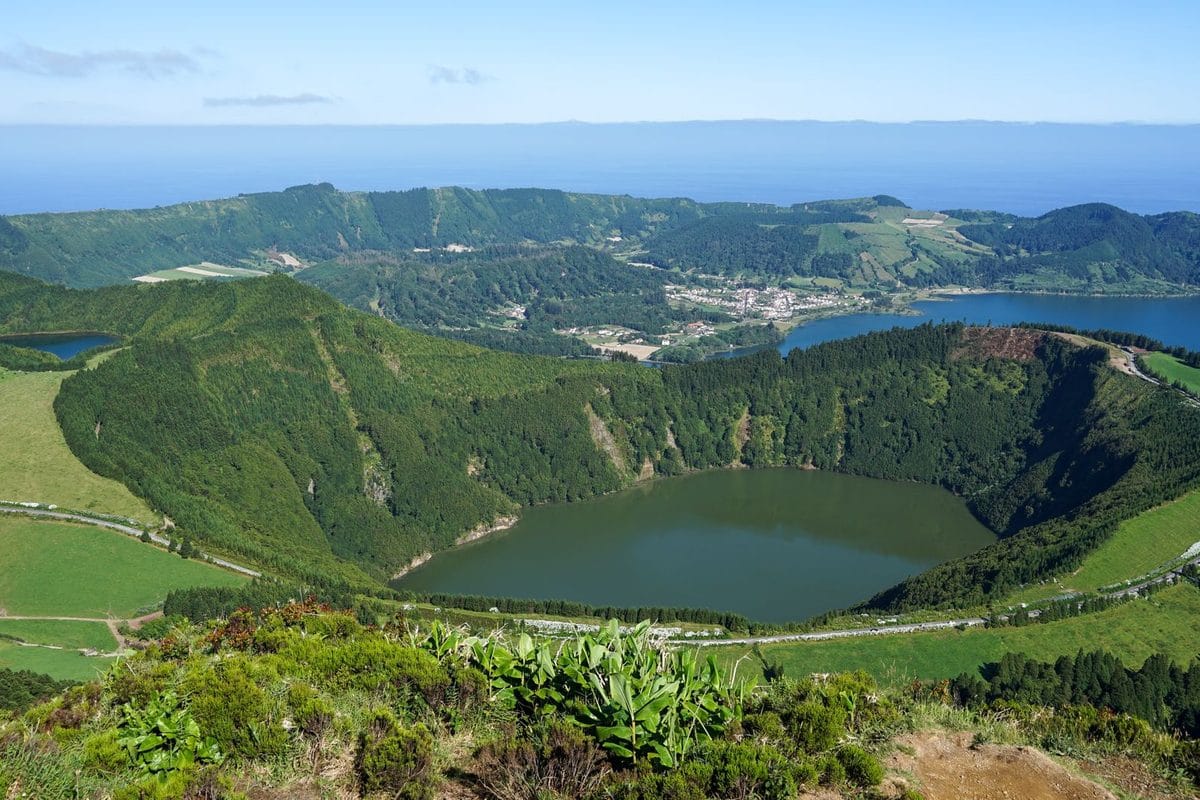
While half of Britain is shuffling through Faro airport towards the Algarve, a string of volcanic islands in the middle of the Atlantic sits roughly the same flight time away and feels like somewhere else entirely. The Azores are Portuguese, technically, but the resemblance to the mainland ends there. Think hydrangeas lining the roads in July, crater lakes the colour of jade, and a climate that rarely climbs above the mid-twenties when Lisbon is melting at thirty-eight. For a UK traveller weary of heat domes and beach scrums, that last point alone makes the case.
Getting there is easier than it used to be
This is the part that has quietly changed. For years the Azores meant a connection through Lisbon, but Ryanair and easyJet now run seasonal direct flights from London and Manchester to Ponta Delgada on São Miguel, the main island, and in summer you can often find a return for £120 to £180 if you book a few weeks ahead rather than the day before. The flight is around four hours, comparable to Crete, and you land into an airport small enough that you are in a hire car within twenty minutes of the wheels touching down.
A word on that hire car: you will want one. Public transport on São Miguel exists but runs on island time, and the whole appeal of the place is reaching the crater rim at Sete Cidades before the coaches arrive. A small car from a local firm like Ilha Verde costs roughly £30 to £45 a day in July, and the roads are quiet enough that even a nervous driver settles in by the second morning.
São Miguel earns its nickname
They call it the green island and it does not disappoint. The two lakes at Sete Cidades, one blue and one green, sit in a vast collapsed crater, and the classic view from the Vista do Rei lookout is worth setting an alarm for. Go at eight in the morning and you might have the railing to yourself; arrive at noon and you are sharing it with three tour groups and a drone.
Further east, the valley of Furnas is where the island shows off its volcanic plumbing. Cooking pots are lowered into the steaming ground here to slow-cook the local stew, cozido das Furnas, over six or seven hours. Several restaurants serve it from around 1pm — book ahead, because the portions are finite and the good places fill. Pair it with a soak in the rust-coloured thermal pool at Terra Nostra garden, where the entry fee of about €10 buys you an afternoon in warm mineral water surrounded by botanical chaos.
Don't try to do all nine islands
Here is where many first-timers overreach. The Azores are nine islands scattered across hundreds of miles of ocean, and the temptation is to island-hop and tick them off. Resist it. The inter-island flights with SATA are reliable but the connections eat days, and you end up seeing airports rather than islands.
For a week, pick two. São Miguel for the lakes, food and that thermal valley, then a short hop to Pico if you want the drama of Portugal's highest mountain rising straight out of the sea, or to Faial for the yachting town of Horta and its famous harbour murals. The catch with the smaller islands is the weather: cloud rolls in fast and can sit on Pico's summit for days, so build in flexibility and don't pin a whole trip on one clear morning.
What it actually costs in summer
The Azores remain noticeably cheaper than the mainland costas, which is half the pleasure. A plate of fresh limpets or grilled fish in a harbour-side café runs €12 to €18, a strong espresso is under a euro, and a bottle of the local Pico wine in a restaurant rarely tops €20. Guesthouses on São Miguel sit around €70 to €110 a night in July, and even the boutique places stay well below what an equivalent room would cost in the Algarve.
Whale watching is the one splurge most people make, and rightly so — the waters off São Miguel are among the best in Europe for sperm whales and dolphins, with boat trips from Ponta Delgada costing around €55 to €65 for a half day. Go with an operator that uses spotters on the cliffs rather than chasing the animals, and choose a morning departure when the Atlantic is calmer.
One thing to know before you book
The Azores are not a beach holiday in the Mediterranean sense, and pretending otherwise leads to disappointment. The coastline is volcanic rock and black sand, the ocean is bracing even in July, and a fortnight of guaranteed sunbathing is not what these islands offer. What they offer instead is greener, wilder and quieter — and for a week in high summer, when the alternative is a sun-lounger turf war on the Algarve, that trade looks better every year.