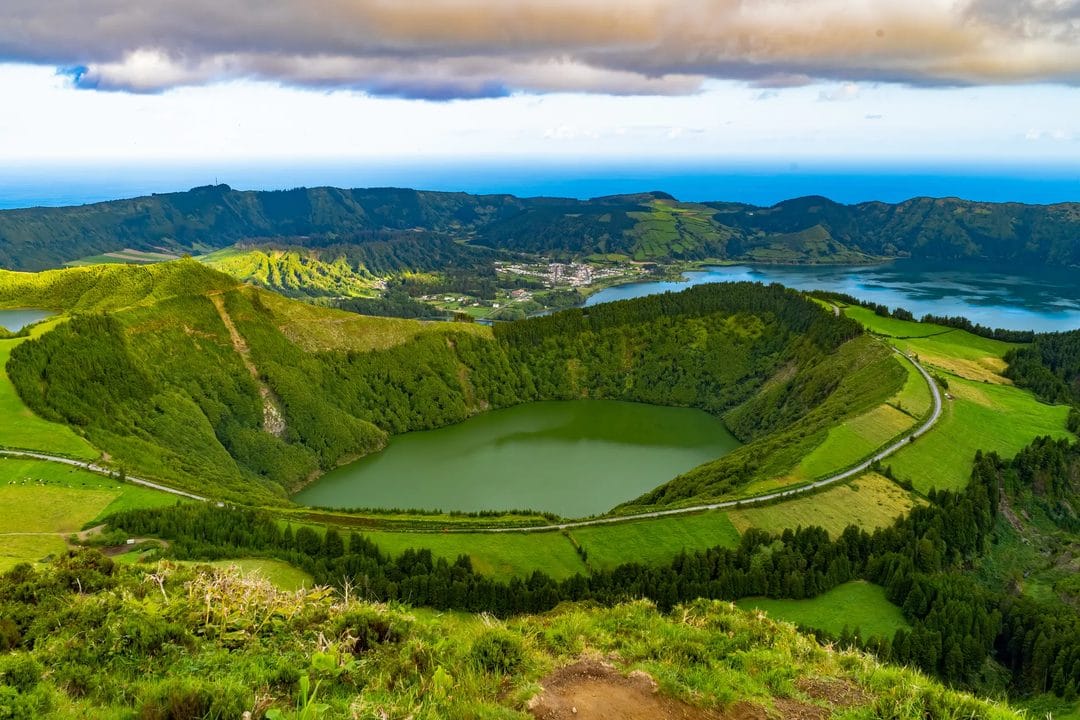
Ask a British traveller where to go for a warm-ish August island break and nine times out of ten you'll hear Tenerife, Lanzarote, or Gran Canaria. Fair enough — direct flights are cheap and the infrastructure is built for exactly this kind of trip. But there's a quieter Atlantic archipelago roughly the same flying distance from London, and in August it delivers waterfalls, crater lakes and geothermal cooking pits instead of another packed resort pool.
Why São Miguel works when the Canaries don't
São Miguel, the largest island in the Azores, sits about four and a half hours from London by air with a connection through Lisbon or Porto on TAP Air Portugal, or a direct seasonal service on SATA Azores Airlines from a handful of UK airports in peak summer. That's longer than the roughly four-hour hop to Tenerife, but the payoff is a landscape that has almost nothing in common with the Canaries' volcanic beaches and high-rise seafronts. São Miguel is green year-round, dotted with hydrangea hedges that are still blooming through August, and the average August daytime temperature sits a comfortable 23 to 25°C — warm enough for swimming, cool enough that you won't spend the afternoon hiding indoors.
The island's real draw is Sete Cidades, twin crater lakes — one blue, one green — inside a single collapsed volcano, reachable by a rental car in under 40 minutes from Ponta Delgada. Renting a car here typically runs €35 to €55 a day through local firms like Ilha Verde or Autatlantis, and honestly, a car is not optional on this island. Public buses exist but run on a schedule built for locals, not tourists on a five-day trip, and the best spots — Lagoa do Fogo, the Furnas valley, the Gorreana tea plantation — sit well outside easy walking distance from town.
Furnas: the valley where lunch cooks in the ground
Furnas deserves its own afternoon, ideally a full day. The village sits inside a volcanic caldera where the ground itself is warm enough to cook a stew called cozido das Furnas — meat, chouriço, cabbage and sweet potato lowered into the volcanic soil in a sealed pot and left for around six hours. Restaurants across the village, including the well-known Tony's, serve it daily for roughly €18 to €24 a portion, and it's one of the only places on earth where the local council literally buries your lunch. Nearby, the Terra Nostra botanical park has a thermal pool the colour of weak tea from dissolved iron, and entry runs about €8 for a full day — cheap for what amounts to swimming in naturally heated mineral water surrounded by 200-year-old trees.
Whale watching without the Tenerife circus
Whale and dolphin watching is genuinely one of the better wildlife experiences in Europe here, not the crowded catamaran-with-a-hundred-people setup you'll find off the Canary coast. Operators like Futurismo run smaller RIB boats out of Ponta Delgada, spotting sperm whales, several dolphin species and, between roughly April and September, the occasional blue whale passing through on migration. A three-hour trip costs around €65 to €75 per person and includes a marine biologist narrating from a lookout post rather than a recorded script. Book at least two days ahead in August — capacity is limited and this is when demand peaks.
What you won't find here is nightlife in the Tenerife sense. Ponta Delgada has a pleasant, low-key marina strip with restaurants and a few bars, but nobody is pretending this is Playa de las Américas after dark. If your idea of an island holiday requires a strip of clubs, skip the Azores and book the Canaries instead — there's no shame in that, it's simply a different trip. But if you'd rather spend the evening watching the sun go down over a crater lake with a glass of local Azorean wine, this is where you come.
Where to stay and what it costs
- Ponta Delgada gives you the widest choice of restaurants and the airport transfer is under 15 minutes — a solid base for a first visit.
- Furnas suits travellers who want the thermal pools and the caldera on their doorstep rather than a half-hour drive each morning.
- Guesthouses and small hotels in August run from around €70 to €140 a night for a double room, noticeably below equivalent Canary Islands beachfront rates in peak season, and a self-catering apartment in Ponta Delgada can be had for under €90.
One thing worth knowing before you book: the weather here is genuinely changeable, sometimes four seasons in a single afternoon, which is exactly why the hydrangeas thrive and exactly why you should pack a light waterproof even in August. It won't ruin your trip — a passing shower over Sete Cidades usually clears within twenty minutes — but anyone expecting guaranteed Mediterranean-style sunshine all week will be disappointed.
The honest comparison
Flights cost more than to the Canaries, and you'll need a hire car rather than a hotel shuttle. In exchange, you get crater lakes instead of a marina full of jet skis, a valley where the ground cooks your dinner, and whale watching that still feels like an expedition rather than a queue. For anyone who has done Tenerife three times already and wants something that still counts as a proper island escape without a ten-hour flight, São Miguel is the better call this August.